Views: 0 Author: Site Editor Publish Time: 2026-05-07 Origin: Site
Selecting the correct dispensing hardware often dictates the ultimate success of an entire assembly line. You cannot achieve a flawless bond if your equipment applies adhesive incorrectly or unevenly. In commercial and industrial applications, an incorrect setup directly leads to substantial adhesive waste, severe aesthetic defects like "telegraphing," and costly line downtime. This failure compromises structural integrity and causes severe production bottlenecks before operators even realize a problem exists.
This guide breaks down the critical engineering criteria for evaluating and selecting the exact spray pattern, orifice size, and hardware configuration required for precision dispensing without system compromise. You will learn how to match fluid dynamics to the right equipment. We will explore how different viscosities demand distinct geometries. Ultimately, this knowledge ensures consistent, flawless application every single time you pull the trigger or activate the line.
Viscosity dictates hardware: Your nozzle selection must align with the specific centipoise (cps) of your adhesive (e.g., standard EVA vs. low-viscosity metallocene).
Pattern aligns with function: Use Bead/Strip nozzles for high-compression structural seals, Spiral nozzles for broad-area Pressure Sensitive Adhesives (PSA), and Fiber/Spray for heat-sensitive substrates.
System compatibility prevents defects: Dripping and "angel hair" (stringing) are often resolved by integrating check valves or specific anti-drip inserts rather than changing the adhesive.
Supplier evaluation matters: Sourcing from a reliable glue gun nozzle manufacturer ensures precise machining tolerances, which prevents over-application and standardizes flow rates (g/h).
Maintenance realities: Physical intervention (like clearing clogs with needles) permanently alters orifice geometry; proper selection should prioritize self-clearing designs and systemic filtration over manual unblocking.
Standard EVA adhesives typically run at 1100 cps at 350°F. They require specific nozzle engagement lengths to flow correctly. Newer metallocene adhesives flow much easier at 700 to 900 cps. You must match the engagement length to these chemical properties. Longer nozzle engagement decreases your overall flow rate. It also increases backpressure inside the heated system. We often see operators ignore this delicate balance. They experience erratic dispensing and premature equipment wear as a result.
Evaluate your feed system before making a hardware change. High-pressure pneumatic piston pumps handle restriction extremely well. They push fluid aggressively through small precision orifices. Continuous-flow electric gear pumps operate completely differently. They need larger orifice diameters to maintain a steady flow. If you restrict a gear pump with a tiny opening, you risk severe motor burnout. Match your pump type strictly to the orifice size limitations.
A successful application requires a perfectly clean shear. When you release the trigger, the adhesive bead must snap immediately. This crisp action prevents "angel hair" or stringing across your substrate. It also minimizes ambient carbonization on the heated tip. You achieve this clean cutoff through proper internal geometry and thermal management. Some formulations inherently string more than others. You can combat this tendency using specialized cutoff designs and integrated valves.
These extrude a continuous, solid line of hot melt. High-volume variants typically feature larger orifices. An industry standard size is often 0.125 inches. You use these for vertical, anti-sag applications. Typical use cases include standard slotted cartons (RSC). They also work perfectly for full overlap cartons (FOL) and heavy structural joinery. The solid bead provides excellent point integrity under high compression.
These rely on localized air jets to manipulate the fluid. The external air spins the extruded adhesive into a continuous overlapping swirl. You use this mechanism for broad surface coverage. It remains essential for applying Pressure Sensitive Adhesives (PSA). You can cover wide areas without problematic pooling. This pattern serves as the industry standard for mattress manufacturing. Upholstery and foam assembly operations also heavily rely on spiral patterns.
These specialized designs atomize the adhesive completely. They require low-viscosity formulations to work correctly. The hardware disperses fine droplets or fibrous webs evenly over the substrate. You need this approach for thin laminates and high-gloss finishes. Underlying adhesive bumps cause "telegraphing" on these sensitive surfaces. Telegraphing creates an ugly orange-peel visual defect. These systems require specialized internal inserts. The inserts prevent post-trigger sputtering and messy drips.
Pattern Type | Primary Mechanism | Best Industrial Applications | Viscosity Requirement |
|---|---|---|---|
Bead / Strip | Solid line extrusion | RSC, FOL cartons, structural joinery | Medium to High |
Spiral | Air-assisted overlapping swirl | Mattresses, upholstery foam, PSA adhesives | Medium |
Fiber / Mist Spray | Air-assisted atomization | Thin laminates, high-gloss finishes, veneers | Low |
Manufacturers design 2, 3, and 5-hole variants for high-speed coverage. These configurations drastically increase your application track width. Some advanced variants span up to 1 inch wide. They achieve this broad coverage without sacrificing your baseline line speed. We highly recommend them for wide-band carton sealing. They also excel in commercial carpet tacking applications where broad adhesion is necessary.
Sometimes you cannot dispense adhesive straight down onto the target. L-Type designs provide precise 90-degree delivery. You use them for blind corners and specialized packaging edges. T-Type designs offer a spatula-like broad delivery system. They create wide, flat coverage across flat seams. Choose these specialized geometries when dealing with awkward substrate angles.
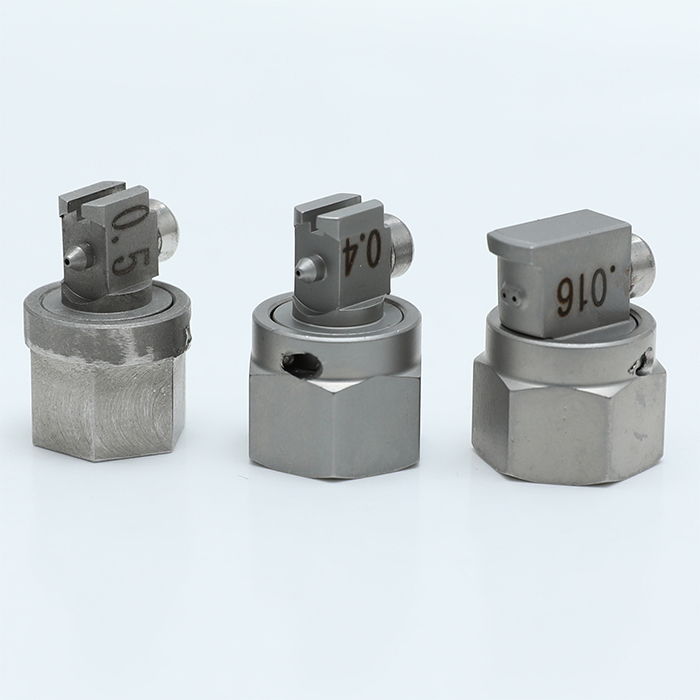
Extension designs feature deliberately elongated tips for challenging access. Their orifices typically range from 1.3mm to 2.38mm. You need them for deep reach into tight cavities. Hardwood floor void filling requires this exact reach. Dense electronic potting also demands extension tips to bypass delicate components. Precision designs use micro-orifices down to 0.059 inches. They provide low-flow, high-accuracy placement. Fine textiles and sensitive electronics rely entirely on precision tips.
Assess the physical access constraints of your substrate assembly.
Determine the required width of the adhesive track.
Calculate the maximum acceptable flow rate to prevent over-application.
Select the specific morphology (multi-hole, angular, or extension) that matches these metrics.
Many industrial dispensing systems feature proprietary threading to restrict your choices. You must assess your operational scale carefully. Do you lock into a single OEM ecosystem for replacements? Or do you source from an independent Glue Gun Nozzle manufacturer? Independent manufacturers often provide much wider aftermarket compatibility. They offer equivalent machining tolerances at substantially better economies of scale. This flexibility protects your production line from supply chain shortages.
A basic metal tip alone cannot stop gravity-induced dripping. You need integrated or compatible check valves in the assembly. Upgrading to these specific assemblies ensures proper negative pressure. They maintain this pressure inside the fluid chamber after trigger release. This directly prevents costly material waste and substrate damage. If your applicator leaks constantly, inspect the check valve before changing the tip.
Your hardware material choice directly impacts thermal consistency. Brass offers excellent heat retention for manual applicators. Hardened steel and aluminum alloys serve different heavy-duty needs. You need them for high-abrasion industrial throughput and automated lines. Look for numerical coding transparency etched on the metal. A common example is "8002". This denotes an 80-degree spray angle and a size 02 orifice. This specific size remains ideal for heavy PU adhesives. Finding a high-quality Glue Gun Nozzle made from the right alloy is critical for longevity.
Many operators mistakenly upsize an orifice to prevent clogs. This approach does not solve your root contamination problem. It simply increases adhesive consumption drastically. It also ruins your calculated bond margins. A larger hole deposits excess material onto the substrate. It compromises the structural design of your packaging. You must address the root cause of the clog instead of masking it with larger hardware.
Oxidized adhesive is the primary enemy of hardware longevity. Char builds up over time inside the heated chamber. It restricts fluid flow and unpredictably alters spray angles. Evaluate your hardware based on its thermal shedding properties. Ensure compatibility with comprehensive in-line filtration systems. Better upstream filtration stops char before it ever reaches the precision tip.
Train your operators to reject the "needle myth." Workers often use pins or drill bits to manually clear clogs. This destructive practice irreversibly scores the internal walls. It artificially widens the orifice and alters calibrated flow rates. It also creates internal micro-grooves inside the metal. These tiny grooves actually accelerate future char build-up. Defective or heavily clogged components must be treated as consumable replacements.
Never insert metal picks, pins, or drill bits into the orifice.
Purge the system regularly to prevent stagnant adhesive from oxidizing.
Utilize in-line mesh filters to catch debris before it reaches the tip.
Replace the tip immediately upon observing asymmetric spray patterns.
Selecting the right Glue Gun Nozzle requires moving beyond basic fitment and treating the tip as a critical piece of fluid control engineering. By matching the specific spray pattern to your adhesive's viscosity, you optimize the entire application process. Consider the structural demands of your substrate to choose between bead, spiral, or fiber spray applications. This strategic alignment eliminates stringing, reduces material waste, and prevents severe aesthetic defects on the final product. Establish strict replacement protocols on your assembly line immediately. Partner with a trusted manufacturer that provides consistent machining tolerances and integrated check-valve solutions. This proactive approach ensures long-term production stability and flawless bond integrity.
A: Dripping is rarely a nozzle geometry issue; it is usually caused by a worn or missing check valve, or in the case of mist spray setups, the absence of an internal anti-drip insert. You should inspect the internal valve mechanisms and ensure they seat properly. Replace the valve if you notice continuous weeping after cutoff.
A: Many manufacturers use a 4-digit standardized coding system. The first two digits represent the spray angle (e.g., "80" for 80 degrees), and the final two digits represent the orifice size. Understanding these numbers helps you precisely match the hardware to your fluid volume requirements and target coverage area.
A: Generally, no. True spiral dispensing requires auxiliary air pressure to spin the extruded adhesive bead. Attempting to run spiral or spray nozzles on basic extrusion guns will result in sputtering or total failure. Your system must support external pneumatic integration to manipulate the adhesive swirl correctly.
A: Nozzles should be treated as precise consumables. They should be replaced immediately upon showing signs of asymmetric flow, inability to cleanly cut off the bead, or when operators resort to physical tools (like needles) to clear char. Regular replacement guarantees consistent flow rates and prevents costly substrate damage.