Views: 0 Author: Site Editor Publish Time: 2026-07-17 Origin: Site
Packaging line efficiency relies heavily on consistent adhesive application. A failing applicator results in popped flaps, wasted substrate, and costly production downtime. Scaling from manual packaging to high-volume automated lines requires transitioning from basic adhesive tools to industrial-grade systems. Decision-makers must balance throughput requirements with equipment reliability without over-engineering the solution.
Selecting the optimal hot melt glue applicator involves more than just matching a machine to a conveyor. It requires a deep understanding of adhesive chemistry, pump mechanics, and thermal dynamics. This guide breaks down the technical criteria for selecting the right applicator, evaluating pump mechanisms, melt systems, and integration requirements based on specific packaging substrates and operational constraints.
Match the applicator delivery method (extrusion, spray, or roll coating) directly to the packaging substrate and required line speed to prevent adhesive failure.
Select pump mechanisms based on operational needs: piston pumps for intermittent, high-pressure carton sealing, and gear pumps for continuous, precise volume metering.
Evaluate long-term operational costs by factoring in maintenance downtime for nozzle clogging and adhesive charring, rather than just initial capital expenditure.
Prioritize modular systems with programmable logic controller (PLC) compatibility to ensure the equipment scales with future packaging volume increases.
Establishing baseline requirements prevents the procurement of underperforming or excessively complex equipment. A reliable hot melt glue applicator machine must align with your specific production metrics. Begin by calculating the required adhesive output. Measure this based on the number of cartons or cases processed per minute. Multiply the adhesive weight per package by the packages per hour to determine the minimum melt rate your system must support. If your line runs 120 cartons per minute, and each carton requires 4 grams of adhesive, your system must reliably melt and pump nearly 29 kilograms of adhesive per hour without dropping temperature.
Substrate variables heavily dictate machine settings. Corrugated board, coated cardstocks, and plastic films all interact differently with thermal adhesives. These materials dictate the necessary open time, set time, and application temperature required to achieve immediate, fiber-tearing bonds. A highly porous recycled corrugated board might require a higher volume bead to prevent the adhesive from absorbing too deeply before the flaps compress. Conversely, a wax-coated or varnished carton requires an adhesive with high tack and a specific applicator nozzle that can penetrate the coating without excessive volume.
Adhesive formulation compatibility is equally critical. You must match the applicator to specific adhesive chemistries. Ethylene Vinyl Acetate (EVA) is standard for basic packaging, but Metallocene or Polyolefin formulations offer cleaner melting and less charring, which impacts pump and nozzle selection. Amorphous Poly Alpha Olefin (APAO) adhesives require different thermal management due to their longer open times and distinct flow rates. Using the wrong adhesive in a high-speed applicator leads to stringing, tailing, and fouled sensors.
Factor in environmental operating conditions. Ambient facility temperatures drastically alter adhesive performance. Cold storage packaging environments pull heat from the adhesive rapidly, requiring higher application temperatures or different nozzle configurations compared to ambient shipping operations. Establish clear success criteria before installation. Define metrics for acceptable seal integrity, allowable waste percentages, and the maximum acceptable maintenance downtime per shift.
Calculate exact adhesive weight per package using a precision scale.
Determine maximum packages per minute (PPM) at peak production.
Multiply weight by PPM, then by 60 to find hourly melt rate requirements.
Add a 20% buffer to the hourly melt rate to account for line speed increases or colder ambient days.
Different packaging applications demand specific delivery methods. Choosing the correct hot melt glue machine for bonding ensures optimal adhesive usage and structural integrity. Applying a continuous bead where a stitched dot pattern would suffice wastes material, while using a spray applicator for heavy carton sealing results in weak bonds and popped flaps.
Extrusion applicators rely on pneumatic or electric actuation to deliver precise beads or dots of adhesive directly onto the substrate. They are the standard for high-speed carton sealing, case erecting, and wrap-around case packing. In these applications, instant tack and clean cutoffs are critical to prevent tailing or stringing across the packaging line. When evaluating extrusion systems, compare the cycle life of pneumatic modules against the speed and longevity of electric applicator heads. Electric heads typically offer faster cycle times and longer lifespans, often exceeding 100 million cycles, making them ideal for high-speed dot stitching which drastically reduces adhesive consumption.
Spray systems use compressed air to swirl or atomize the hot melt adhesive over a wider surface area. This method is best suited for pallet stabilization, foam-to-corrugated bonding, and heat-sensitive substrates. A concentrated bead might cause burn-through or structural damage on thin plastics or foams, whereas a spray pattern distributes the thermal load. Evaluate spray applicators by assessing air consumption costs and the potential for adhesive overspray, which can foul conveyor belts and sensors. Proper air pressure regulation is mandatory to maintain a consistent swirl pattern without blowing adhesive off the target area.
Roll coaters utilize a heated rotating cylinder to apply a continuous, even film of adhesive. They are engineered for thin, flat substrates, wide-web laminations, slip sheet bonding, and continuous feed packaging operations. The primary evaluation lens for roll coaters involves the ease of adjusting coating thickness and the daily maintenance required to keep the roller free of debris and cured adhesive buildup. Precision doctor blades are required to meter the adhesive film accurately, and these blades require regular inspection for wear.
Manual applicators are handheld devices utilizing standard temperature packaging glue sticks or bulk-melt handheld feeds. They serve low-volume custom packaging, offline rework stations, and oversized carton sealing that cannot be integrated into automated conveyor lines. The critical step for operations managers is identifying the throughput threshold where manual application becomes a bottleneck. Once operator fatigue or slow application speeds hinder production, a shift to automated systems becomes necessary. Bulk-feed manual guns connected to a central melt tank offer a middle ground, providing higher volume without the full automation footprint.
Applicator Type | Primary Mechanism | Best Packaging Application | Key Evaluation Metric |
|---|---|---|---|
Extrusion (Bead/Dot) | Pneumatic/Electric actuation | High-speed carton sealing, case erecting | Cycle life and cutoff cleanliness |
Spray | Air-assisted atomization | Pallet stabilization, foam bonding | Air consumption and overspray control |
Roll Coater | Heated rotating cylinder | Flat substrates, wide-web lamination | Coating thickness adjustability |
Manual (Glue Gun) | Handheld trigger feed | Offline rework, custom low-volume | Throughput bottleneck threshold |
Sizing the hot melt tank correctly is a balancing act. You must calculate hourly adhesive consumption to select a reservoir that melts adhesive fast enough to sustain line speed without holding it at temperature too long. Oversized tanks lead to thermal degradation. Prolonged heat exposure causes adhesive charring, viscosity changes, and subsequent nozzle blockages. Look for user-friendly melt features. Designs featuring quick-access melt grates, sub-reservoir filters, and easy-to-clean tank manifolds drastically reduce manual cleanout times during shift changes. A tank with a melt-on-demand grid is often superior to a standard reservoir, as it only melts the adhesive immediately required by the pump, keeping the bulk of the adhesive in a solid, un-degraded state.
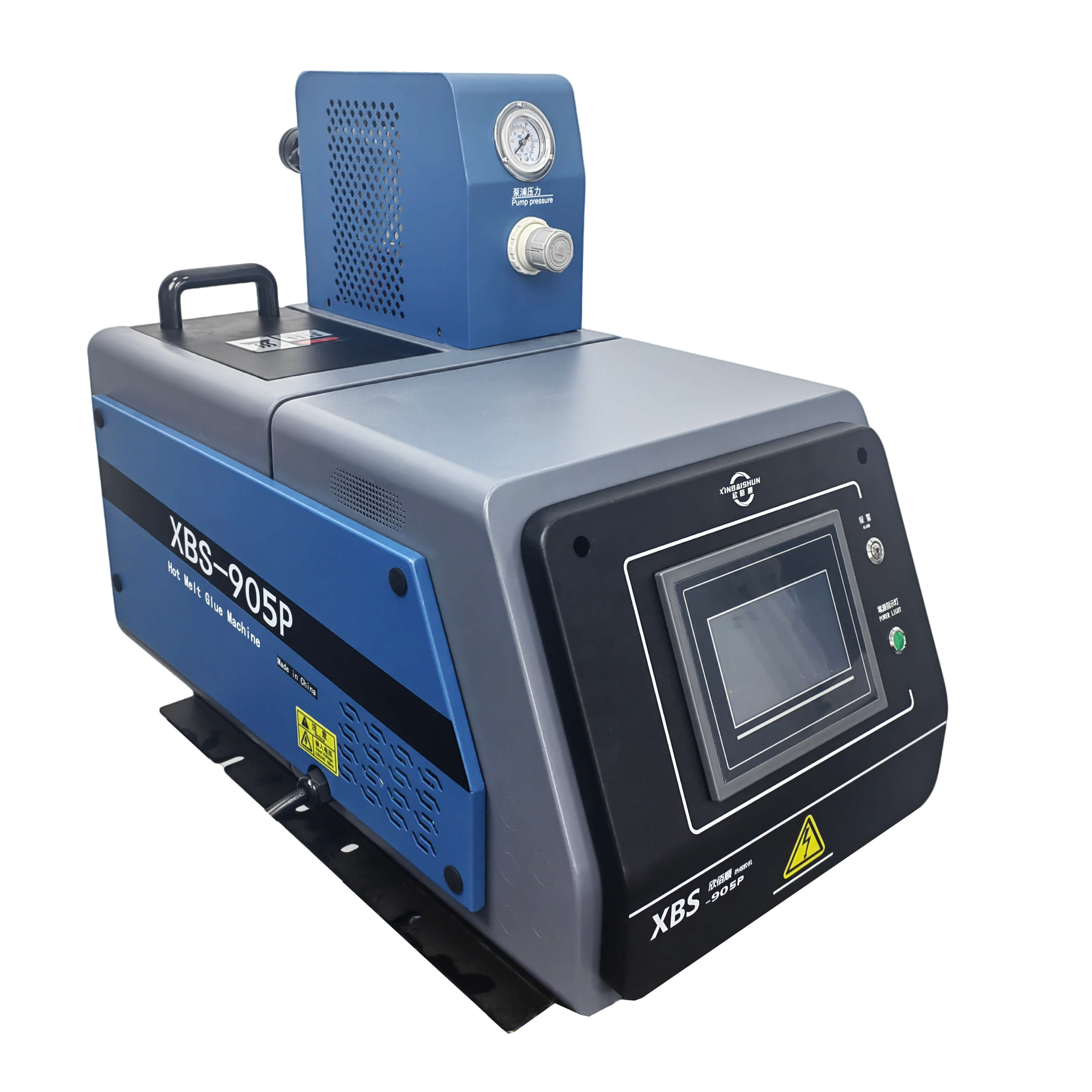
The pump is the heart of the delivery system. A piston pump hot melt glue machine is highly effective for intermittent, high-pressure applications like standard case sealing. Piston pumps are durable and generally easier to rebuild in the field. However, they can experience pressure fluctuations, known as hydraulic spikes or drops, during pump stroke changes. This momentary drop in pressure can cause a skipped bead if it aligns perfectly with a carton passing the applicator. Gear pumps, conversely, excel at continuous, precise volume metering. They maintain consistent adhesive weight per package, handle high-viscosity formulations effortlessly, and prevent pattern distortion on continuous high-speed runs. Gear pumps are driven by electric motors, allowing for precise RPM control tied directly to the conveyor line speed via an encoder.
Heated hoses play a critical role in maintaining multi-zone temperature stability from the tank to the applicator head. Temperature drops in the hose lead to stringing and poor adhesion. Hoses must be routed carefully to avoid sharp bends that can damage the internal heating elements or restrict adhesive flow. Nozzle selection must match the specific application. The orifice size, number of ports, and engagement angle must align with the adhesive viscosity, line speed, and required bead profile to ensure a reliable bond. A 90-degree nozzle might be necessary for tight machine clearances, while a multi-orifice nozzle can lay down three parallel beads simultaneously for wide flap sealing.
Balancing capital expenditure against operational efficiency dictates long-term packaging success. Weigh the upfront cost of advanced electric applicators against the long-term savings in compressed air and adhesive reduction. Features like dot-pattern stitching can reduce adhesive consumption by up to fifty percent compared to continuous solid beads. While an electric applicator head costs more initially than a pneumatic module, the elimination of compressed air usage and the massive reduction in adhesive volume often yield a return on investment within months.
Avoid the hidden costs of budget equipment. Frequent parts replacement, inconsistent bonding leading to popped flaps in transit, and manual rework quickly erase any initial savings from cheaper machinery. When a cheap pneumatic module fails, the line stops. If it fails partially, it may apply too little adhesive, resulting in pallets of unsecured product that must be manually repacked. Energy consumption metrics also matter. Evaluate the power draw of multi-zone heated systems, the insulation efficiency of hoses and heads, and the availability of programmable standby modes that drop temperatures during line pauses to save power and protect adhesive integrity.
Prolonged heat exposure degrades adhesive, leading to clogged nozzles and halted production. Charring acts like sand in the system, destroying pump seals and blocking fine nozzle orifices. Mitigate this risk by implementing auto-feed systems to maintain optimal tank levels. Utilize programmable standby temperature modes that lower the heat during idle periods. Establish strict flushing protocols using specialized purging compounds to clear degraded adhesive before it hardens in the manifold. Routine filter changes are non-negotiable; inline filters at the applicator head catch char before it reaches the nozzle, but they must be inspected weekly.
Applicator footprint constraints and communication failures with existing conveyor systems pose significant integration risks. Verify PLC compatibility and encoder tracking capabilities for variable speed lines. Conduct thorough spatial audits before purchase to ensure the melt unit, hoses, and applicator heads fit within the physical confines of your current case erectors or sealers. The applicator head must be mounted rigidly to prevent vibration, which can cause the adhesive bead to wander off the target flap.
Pressurized hot melt systems present severe burn hazards. Operating temperatures routinely exceed 175 degrees Celsius. Improper maintenance procedures exacerbate these risks. Specify systems equipped with insulated touch-safe components and integrated pressure relief valves. Develop user-friendly standardized operating procedures (SOPs) for daily tasks, particularly focusing on safe, quick-change nozzle replacements and tank refilling protocols. Operators must wear appropriate personal protective equipment (PPE), including heat-resistant gloves and face shields, whenever interacting with the melt tank or pressurized hoses.
Common Issue | Probable Cause | Field Solution |
|---|---|---|
Nozzle Clogging | Adhesive charring or debris in tank | Flush system, replace inline filters, lower standby temp |
Stringing/Tailing | Operating temperature too low or wrong nozzle | Increase hose/head temp, verify nozzle orifice size |
Inconsistent Bead | Pump pressure fluctuation or pneumatic lag | Check pump seals, verify incoming air pressure stability |
Poor Adhesion | Open time exceeded before compression | Move applicator closer to compression section, increase temp |
Audit your current adhesive consumption and line speed requirements to determine the exact melt rate needed before contacting suppliers.
Map out the physical footprint of your packaging line to ensure the new melt tank and hoses can be routed without creating trip hazards or sharp bends.
Request a technical demonstration and substrate testing from manufacturers to validate bond strength on your specific corrugated or coated materials.
Develop a strict weekly maintenance schedule focusing on filter replacements and nozzle inspections to prevent unexpected downtime.
A: A piston pump uses a reciprocating mechanism ideal for intermittent, high-pressure applications like case sealing. A gear pump uses rotating gears to provide continuous, precise, and pulse-free adhesive metering, making it better for continuous lines and high-viscosity adhesives.
A: Calculate your hourly adhesive consumption based on line speed and adhesive weight per package. Choose a tank that melts adhesive fast enough to keep up with production but small enough to prevent the adhesive from sitting at high temperatures for extended periods, which causes charring.
A: Yes, but you may need to adjust the application temperature, pump pressure, and nozzle size. Highly porous recycled cardboard often requires more adhesive or a different formulation compared to virgin or coated cardstocks to achieve a proper fiber-tearing bond.
A: Clogs are primarily caused by adhesive charring due to prolonged heat exposure or contaminants entering the tank. Prevent clogs by using auto-feed systems, enabling standby temperature modes during downtime, and regularly cleaning tank filters and manifolds.
A: An upgrade is necessary when manual application becomes a production bottleneck, causes operator fatigue, results in inconsistent adhesive application, or when packaging volumes exceed the physical capacity of manual labor to maintain required throughput.
A: High-viscosity adhesives require nozzles with larger orifice sizes and higher pump pressures to flow correctly. Low-viscosity adhesives need smaller orifices to prevent dripping and ensure precise cutoff without stringing across the packaging substrate.
A: It is best used for standard, intermittent carton and case sealing operations. The piston mechanism excels at delivering quick, high-pressure bursts of adhesive required for rapid bead or dot extrusion on fast-moving, start-and-stop conveyor lines.