Views: 0 Author: Site Editor Publish Time: 2026-07-24 Origin: Site
Polyurethane (PUR) adhesives deliver superior bond strength and thermal resistance for demanding manufacturing applications. Improper equipment setup leads to catastrophic system curing, extensive downtime, and costly repairs. Transitioning to or optimizing PUR systems requires managing moisture sensitivity, precise temperature staging, and strict purging protocols compared to traditional EVA hot melts. These adhesives see widespread adoption in industrial packaging and edgebanding manufacturing environments where failure is not an option. This guide provides a definitive, engineering-led walkthrough for configuring a PUR glue machine. Following these steps minimizes implementation risks and ensures consistent, high-yield production runs. We will cover everything from initial facility readiness to advanced purging techniques, giving operators the exact parameters needed to maintain continuous, defect-free extrusion.
Precision Temperature Control: Staging temperatures correctly across the hot melt tank, hoses, and applicator heads is non-negotiable to prevent premature cross-linking and adhesive degradation.
Moisture Management: PUR reacts with ambient moisture; maintaining a sealed system and utilizing dry air or nitrogen blankets is critical for continuous operation.
Mandatory Purge Protocols: Establishing a strict, scheduled purge and cleaning routine using specialized reactive cleaners (e.g., Technomelt PUR cleaners) prevents irreversible adhesive curing within the gear pumps and hoses.
Equipment Alignment: Matching the specific configuration of a heavy-duty PUR hot melt glue machine to your production volume and substrate requirements dictates long-term ROI and operational scalability.
Successful adhesive application begins long before the equipment is powered on. Establishing baseline metrics for your specific industry application dictates how the machine must be configured. For packaging lines, operators prioritize fast cure speeds and high-impact resistance. Edgebanding operations demand zero-joint appearance and extreme heat or moisture resistance on edgebander lines like Holzher. You must define targeted dispense rates, acceptable open times, and maximum allowable downtime for maintenance before assembly. Setting these parameters early prevents retrofitting delays later.
Facility infrastructure directly impacts machine performance. Multi-zone heating systems require specific electrical configurations to operate without voltage drops. Ensure your facility matches the required voltage and phase specifications of the equipment. Systems utilizing dry air to prevent moisture ingress need reliable pneumatic connections. Handling reactive polyurethane fumes also requires proper ventilation and OSHA-compliant exhaust systems. Operators must verify that air compressors deliver clean, dry air, as any moisture in the pneumatic lines will bypass the system seals and cure the adhesive prematurely.
Evaluating whether your current hot melt tank size aligns with hourly adhesive consumption prevents major operational failures. Over-feeding a small tank causes thermal shock, dropping the application temperature and ruining the bond. Conversely, under-utilizing a large tank leaves adhesive baking at high temperatures, leading to thermal degradation and charring. You need to calculate your exact gram-per-minute usage and match it to the melt rate of the reservoir.
Production Volume | Tank Capacity Match | Risk of Mismatch |
|---|---|---|
Low (Intermittent) | Small (2-5 kg) | Adhesive degradation from prolonged heat exposure. |
Medium (Continuous) | Standard (10-20 kg) | Inconsistent temperatures if fed too rapidly. |
High (Automated Lines) | Large / Bulk (200L drums) | Thermal shock if melt rate cannot keep up with dispense rate. |
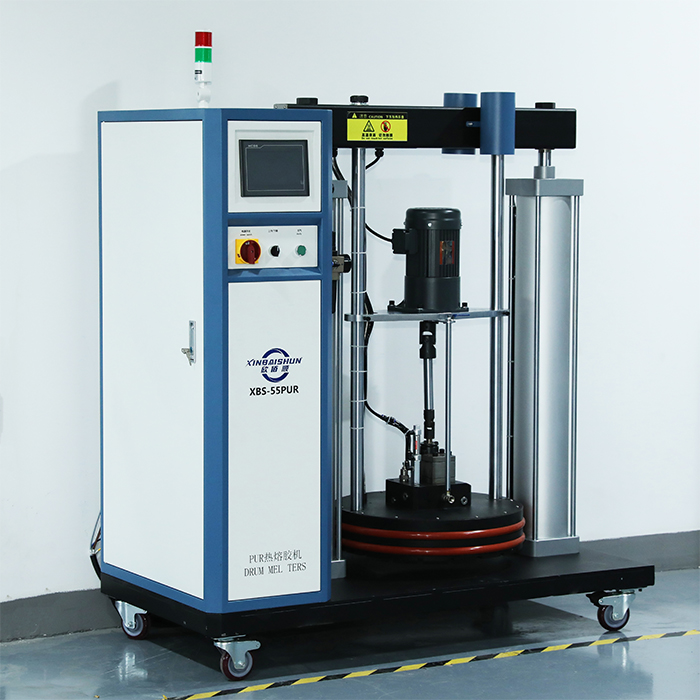
Proper assembly prevents immediate mechanical failures. Inspect the gear pump mechanism for factory seals and verify the motor drive alignment upon unboxing. A PUR Hot Melt Adhesive Machine with Gear Pump is heavily favored over pneumatic piston pumps for these applications. Gear pumps provide continuous, pulse-free extrusion, handle high viscosity materials effortlessly, and allow precise speed correlation with line speeds. Check all mounting brackets and ensure the chassis sits level on the factory floor to prevent uneven adhesive melting.
Connecting heated hoses requires attention to detail. Ensure all electrical connections for RTD (Resistance Temperature Detector) sensors are secure to prevent runaway heating. Inspect applicator nozzles for micro-abrasions or blockages prior to initial heating. Even microscopic debris can disrupt the adhesive pattern. Route the hoses carefully to avoid sharp bends or pinch points that could restrict flow or damage the internal heating elements.
PUR adhesives cure when exposed to ambient humidity. Securing the tank lid and ensuring O-rings and gaskets are seated correctly maintains a hermetic seal. Any breach in this seal introduces moisture, initiating the cross-linking process inside the reservoir and destroying the equipment. Apply a light coat of high-temperature grease to the O-rings during assembly to ensure a perfect, airtight fit every time the lid is closed.
A graduated temperature profile from the reservoir to the hose, and finally to the applicator gun, prevents premature curing. This staged heating approach ensures the adhesive reaches its optimal viscosity right at the point of application without baking in the reservoir. Setting the tank slightly cooler than the hoses prevents the bulk adhesive from degrading while waiting to be pumped.
Operators must strictly follow a 15-20 minute preheating requirement for PUR adhesive cartridges or slugs. Using external cartridge ovens or integrated preheaters softens the material before it enters the main system. Attempting to force cold, solid adhesive through the applicator head will cause immediate mechanical damage to the gear pump and blow out the hose seals.
Standard baseline temperature ranges for PUR typically fall between 250°F and 275°F (120°C - 140°C). Exact temperatures depend entirely on the specific adhesive manufacturer's technical data sheet (TDS). Once the system reaches the set point, a 15-20 minute mandatory preheat stabilization period is required before engaging the pump. This prevents mechanical shear damage to the gears from partially melted adhesive. Program the PLC to lock out the pump motor until all zones report stable temperatures for the required duration.
Ambient facility temperature and substrate temperature interact directly with the machine's heat settings. Cold substrates draw heat away rapidly, shortening the adhesive's open time and affecting green strength. Adjusting application temperatures within the TDS limits helps manage the overall cure curve. If the plant environment drops below 60°F, you may need to increase the nozzle temperature slightly to compensate for the rapid heat loss upon application.
Introducing adhesive into a heavy-duty pur hot melt glue machine requires strict protocols to prevent trapping air or moisture. For bulk systems, operators utilize foil liners and inert gas (nitrogen) blankets to displace oxygen and humidity. When loading slugs or cartridges, wipe down the exterior to remove condensation before insertion. Never leave the tank lid open longer than absolutely necessary during the loading process.
Calibrate the gear pump RPM to match the required gram-per-meter line speed. Conduct a purge-to-waste test to verify a steady, bubble-free adhesive stream before applying it to live production substrates. Bubbles indicate trapped air or moisture reacting with the adhesive. Adjust the motor speed incrementally, measuring the output weight over a ten-second interval until you hit the exact target specification.
Manual pressure adjustments require constant operator oversight and often lead to inconsistent application weights. Automated, PLC-integrated flow controls adjust pump speeds dynamically based on line speed. This automation drastically reduces adhesive waste and ensures consistent bond lines. Upgrading to a system with encoder feedback guarantees that the adhesive volume scales perfectly as the conveyor speeds up or slows down.
Once PUR cross-links and cures via moisture, it cannot be remelted. It must be mechanically removed or prevented entirely. This chemical reality demands strict, scheduled purge routines. Skipping a purge cycle at the end of a production week guarantees a destroyed gear pump by Monday morning.
The hot melt system must be heated completely to its operational melting temperature before introducing cleaning or purging compounds. Attempting to purge a cold system will rupture hoses and destroy pump seals. Verify that the applicator head is fully up to temperature so the purging compound can flow freely through the smallest nozzle orifices.
Transitioning from active PUR adhesive to a compatible reactive cleaner requires precision. Follow these exact steps to ensure a complete flush.
Heat the system to the operational temperature of the active PUR.
Dispense remaining adhesive until the reservoir is nearly empty.
Introduce the specialized reactive cleaner (e.g., Technomelt PUR cleaners).
Adjust the temperature to match the cleaner's specifications.
Flush the system until the output shows a steady stream of clear cleaning compound, free of reactive bubbles or color tint.
Operators need a clear decision matrix for shutdowns. For short weekend pauses, leaving the system sealed at a reduced standby temperature prevents thermal degradation while keeping moisture out. For long-term shutdowns exceeding the adhesive's pot life, a full system flush and drain is mandatory. Always consult the adhesive TDS to determine the maximum allowable time the material can sit at standby temperatures.
Deploying reactive adhesives introduces specific operational risks that must be managed proactively. Ignoring these risks leads to excessive downtime and high replacement part costs.
Moisture ingress ruins the adhesive batch and clogs the system. Mitigate this by implementing strict protocols for lid management. Utilize desiccant breathers on the reservoir and conduct regular inspections of pneumatic air dryers to ensure dry air delivery. Replace desiccant cartridges the moment they change color.
Leaving adhesive at application temperature during line pauses causes charring. Mitigate this by utilizing the machine's standby mode, which drops the temperature to a safe holding level. Calibrate RTD sensors quarterly to prevent localized hot spots that burn the adhesive. Flush the tank immediately if you detect black specks in the extrusion line.
Handling pressurized, reactive adhesives at 250°F presents severe burn hazards. Establish mandatory PPE requirements, including heat-resistant gloves and face shields. Create standardized operating procedures (SOPs) tailored to your specific machine model. Train all new operators on the emergency stop locations and pressure relief valve procedures.
Successful PUR application relies heavily on preparation and maintenance. A properly configured machine guarantees superior bond integrity and operational efficiency. Facilities experiencing frequent nozzle clogging, inconsistent gear pump pressure, or lacking automated standby features should evaluate their current setup for an upgrade. Taking immediate action on equipment maintenance prevents catastrophic line failures.
Audit your current hot melt equipment for moisture sealing integrity today.
Standardize your daily and weekly purge schedules using approved reactive cleaners.
Consult with an adhesive equipment engineer to request a customized configuration plan.
Schedule an on-site demonstration of advanced PUR systems to evaluate automated flow controls.
A: Heating typically takes 15 to 45 minutes depending on the tank volume and ambient temperature. Once the system reaches the set point, a mandatory 15-20 minute stabilization period is required to ensure all adhesive is fully melted before engaging the pump.
A: Yes, if the machine has a standby mode and a hermetic seal or nitrogen blanket. Standby mode lowers the temperature to prevent thermal degradation. However, thermal stability has limits; extended periods eventually require a full purge.
A: A gear pump provides continuous, pulse-free delivery and easily handles the high viscosity of PUR adhesives. Piston pumps operate cyclically, which can cause pulsing in the adhesive line and inconsistent application weights.
A: First, heat the system to operational temperature and empty the remaining PUR. Add the cleaning agent, adjust to the cleaner's required temperature, and run it through the system until the output is clear. Purge the residual cleaner before reloading fresh adhesive.
A: Yes. PUR adhesive systems integrate seamlessly into edgebanding machinery to provide superior, moisture-resistant, and heat-resistant joints. They require precise interface configurations and specialized applicator nozzles to match the edgebander's speed.
A: Bubbling indicates a chemical reaction occurring before application. Common causes include moisture contamination in the tank, air trapped during the loading process, or operating temperatures exceeding the adhesive's maximum thermal threshold.
A: The general application range is 250°F to 275°F (120°C to 140°C). However, operators must strictly follow the specific adhesive manufacturer's Technical Data Sheet (TDS), as formulations vary significantly.