Views: 0 Author: Site Editor Publish Time: 2026-07-23 Origin: Site
Manual gluing creates severe production bottlenecks. You waste expensive material daily. Bead profiles lack consistency across shifts. Cycle times drag down your entire assembly line. Manufacturers need a reliable baseline for scalable fluid application. Enter the XYZ axis glue machine. It offers repeatable dispensing to solve these exact problems. However, you cannot simply plug it in and expect magic. Moving to automated systems requires careful evaluation first. You must assess specific payload limits before procurement. You also need to understand your fluid viscosity and precision requirements. Without this groundwork, you risk buying the wrong equipment entirely. This article guides you through the mechanical advantages, core applications, and implementation realities. You will learn how to transition smoothly from manual processes to measurable, data-driven automation.
Repeatability at Scale: A three axis dispenser eliminates human error, ensuring exact volumetric placement across complex X, Y, and Z topographies.
Material Versatility: Engineered to handle varying fluid dynamics, from low-viscosity cyanoacrylates to high-viscosity, abrasive AB component resins.
Clear ROI Pathways: Reduces adhesive waste by up to 30% and significantly lowers defect rates in strict-compliance sectors like EMS and medical manufacturing.
Implementation Reality: Success relies heavily on proper fixture design, valve selection, and baseline temperature control to prevent material curing in the lines.
Manual dispensing hides significant costs on your factory floor. Operators experience fatigue over a shift. This fatigue leads to inconsistent bead sizes and misplaced adhesive drops. You subsequently face higher rework rates. Variable yield eventually destroys your profit margins. Hand-held syringes also leave residual material in the barrel. This translates directly to expensive consumable waste over time.
You must define what successful automatic glue dispensing looks like for your operation. A successful upgrade delivers measurable cycle time reduction. It ensures a consistent bead volume on every single part. Furthermore, it provides verifiable quality control data. You can trace back every production batch to specific machine parameters.
Evaluate this upgrade through a strict cost-benefit lens. The initial capital expenditure (CapEx) might seem high. However, you must balance this against long-term operational savings. You will see a drastic reduction in consumable waste. Throughput increases significantly when a machine operates continuously without fatigue. The transition turns an unpredictable manual task into a highly controlled process.
Here is a simplified baseline comparison between manual and automated operations.
Operational Metric | Manual Dispensing | Automated XYZ Dispensing |
|---|---|---|
Material Waste | High (15-30%) | Low (<5%) |
Cycle Time Consistency | Highly Variable | Strictly Controlled |
Rework Rate | Frequent | Minimal to None |
Operator Skill Required | High (Artisan level) | Low (Monitoring level) |
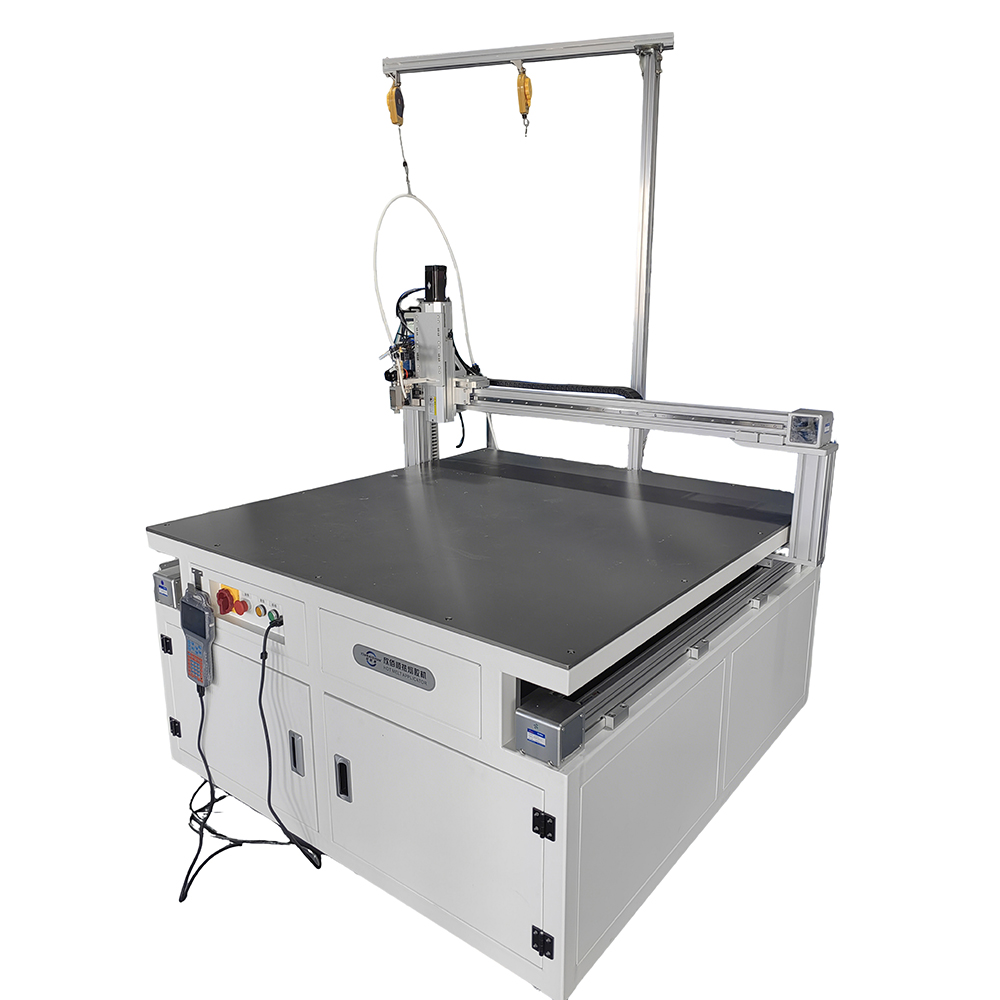
Independent motors drive the X, Y, and Z axes. This separation allows for advanced spatial control and interpolation. The machine executes continuous path dispensing effortlessly. It easily navigates 3D profiling and complex potting geometries. You can program circles, arcs, and intricate topographies. The motors synchronize seamlessly to maintain a constant tool-tip speed.
Volumetric consistency represents another major advantage. The system connects physical motion control to precise fluid pressure and time parameters. You guarantee exact shot sizes every cycle. Advanced controllers prevent common fluid defects like stringing or tailing. The machine snuffs back the fluid at the exact millisecond the motion stops.
System modularity gives you incredible flexibility. You can integrate different valve types onto the same robotic platform. You select the valve based on fluid viscosity and required cycle speeds. This modularity ensures your machine adapts to future product lines easily.
Pneumatic Valves: Excellent for general-purpose, medium-viscosity fluids. They offer a simple, robust design.
Auger/Screw Valves: Perfect for high-viscosity, abrasive materials like solder pastes or thermal gels.
Piezo Jet Valves: Designed for extreme high-speed micro-dispensing. They shoot fluid without touching the substrate.
Adopting precision dispensing transforms industries demanding zero defect rates. You will find these systems thriving in highly regulated manufacturing environments.
Modern electronics require immense protection from environmental factors. Manufacturers use these machines for conformal coating, underfilling, and component encapsulation. Bare circuit boards possess incredibly tight tolerances. A machine easily navigates these micro-landscapes. It avoids critical keep-out zones to prevent solder joint contamination. You protect fragile microchips from thermal shock and moisture damage.
The automotive industry relies heavily on form-in-place (FIP) gaskets. You see them applied on engine housings and electronic control units (ECUs). These parts face extreme vibration and temperature fluctuations. The machine manages highly viscous silicone and polyurethane materials flawlessly. It traces the complex perimeter of automotive housings. This creates a perfect, watertight seal without relying on pre-cut rubber gaskets.
Medical manufacturing tolerates absolutely no errors. Facilities must adhere to strict compliance and traceability standards (like ISO 13485). These machines handle needle-bonding and complex housing assemblies daily. They require microscopic, repeatable fluid placement. UV-cure adhesives are often applied to join surgical instruments. The system ensures the exact same volume of medical-grade cyanoacrylate reaches every single device.
Your ambient factory conditions directly impact material behavior. Changes in temperature and humidity alter adhesive viscosity throughout the day. Morning runs might flow differently than afternoon runs. This reality requires dynamic system calibration. Many facilities integrate temperature-controlled fluid reservoirs. They keep the adhesive stable regardless of factory floor conditions.
Two-part (AB component) resins introduce entirely different challenges. You must manage the chemical pot life carefully. Static mixing nozzles have strict time limits before the material cures inside them. If a machine sits idle too long, the resin hardens in the dispensing lines. You face expensive downtime and replacement parts if this occurs.
A high-precision machine still fails if your tooling is inadequate. Physical workpiece holding must be robust and calibrated. If a part shifts by a fraction of a millimeter in its nest, the glue bead will miss its target. Fixture dependencies are critical. You must invest in high-quality, CNC-machined fixtures to secure your substrates.
Maintenance overhead is a reality you cannot ignore. Transparent scheduling prevents catastrophic failures.
Inspect pneumatic lines daily for condensation or pressure drops.
Execute strict valve cleaning protocols at the end of every shift.
Replace static mixer nozzles based on exact pot-life timers.
Calibrate the XYZ drive axes quarterly to maintain positional accuracy.
You must clearly define your payload and work area first. Match the machine's XYZ travel limits to your largest production part dimensions. Consider the structural rigidity of the gantry. If you mount a heavy auger valve, a lightweight frame will vibrate. Vibration destroys dispensing accuracy. Ensure the Z-axis motor can handle the tool weight effortlessly.
Assess the software and CNC integration capabilities. Evaluate the learning curve of the teaching pendant. Some systems use proprietary CAD-to-path software. This software allows your engineers to import 3D models directly. It generates the dispensing path automatically. A simple interface empowers your line operators to make minor adjustments without calling engineering.
Prioritize vendors offering strong domestic support and rapid parts availability. Wear parts break down eventually. Nozzles, fluid seals, and stators require replacement. You need an OEM that ships parts overnight. A three axis dispenser becomes useless if you wait weeks for a replacement seal.
Insist on a Proof of Concept (PoC) before generating a purchase order. This trial is absolutely mandatory.
Send your exact substrate and preferred adhesive to the vendor.
Request a live demonstration of the machine running your specific part.
Measure the resulting bead profile and verify the cycle time.
Confirm the machine achieves your defined success criteria under real conditions.
Upgrading to an XYZ axis system fundamentally changes your manufacturing floor. You transition fluid application from a highly variable art to a measurable, controllable science. You eliminate the guesswork of manual syringes. Quality control becomes a proactive process rather than a reactive sorting task.
Your next steps involve gathering baseline data:
Audit your current scrap rates attributed to poor gluing.
Calculate your exact monthly adhesive consumable costs.
Time your current manual processes to establish a cycle-time benchmark.
Build a solid financial justification before requesting vendor demonstrations.
A: Typical repeatability ranges from ±0.01mm to ±0.05mm. This depends heavily on the drive mechanism. Servo motors paired with precision ball screws offer the highest accuracy. Stepper motors using timing belts provide slightly lower precision but remain cost-effective. The chosen valve also dictates the final fluid placement tolerance.
A: Yes, they routinely handle thick, abrasive fluids like thermal pastes. However, you need specific hardware. You must use auger or screw valves instead of standard pneumatic valves. You also need hardened fluid-body components, like carbide stators, to prevent rapid wear from abrasive particles.
A: Simple paths take just minutes using a standard teaching pendant. You physically jog the machine to key points and save them. Complex 3D profiles require more robust engineering setups. Using CAD-import software, engineers can program intricate geometries in under an hour without taking the machine offline.