
Views: 0 Author: Site Editor Publish Time: 2025-12-09 Origin: Site
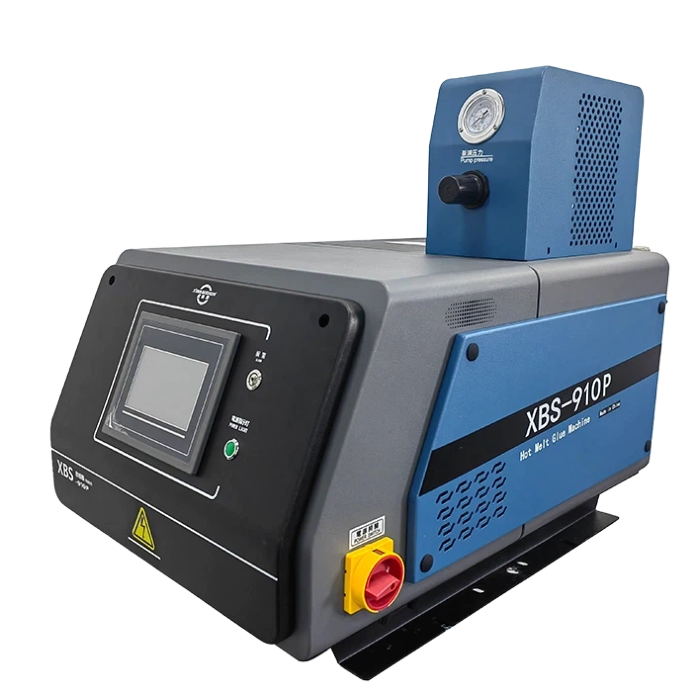
A Hot Melt Glue Machine is a versatile and essential tool used in various industrial sectors to apply adhesive efficiently. This system is known for its ability to melt solid adhesives and deliver them smoothly onto substrates at precise temperatures. Whether in packaging, woodworking, electronics, or automotive industries, Hot Melt Glue Machines have revolutionized the way adhesives are used, offering greater efficiency, speed, and consistency. In this article, we will explore the main components, working mechanism, types, advantages, and considerations of hot melt glue machines, focusing on how Xinbaishun’s Hot Melt Glue Machines cater to these industrial needs.
A Hot Melt Glue Machine for packaging is an industrial adhesive dispensing system that melts solid thermoplastic adhesives, delivering them as molten glue to various applications. The glue is typically solid at room temperature but becomes liquid once it is heated. The machine maintains a controlled temperature to ensure the glue remains in its optimal liquid state, enabling easy application onto substrates. These systems are especially beneficial for industries where fast bonding is essential, such as in packaging and assembly lines.
The term "hot melt" refers to adhesives that are solid at ambient temperatures but become liquid when heated. These adhesives are thermoplastics, meaning they soften when heated and harden again as they cool. The melting process involves applying heat to the solid adhesive until it reaches the required viscosity, making it ideal for fast bonding applications.
Unlike solvent-based or water-based adhesives that require time to dry and bond, hot melt adhesives are fast-setting and immediately form a strong bond once they cool. Solvent-based adhesives use a liquid carrier to dissolve the adhesive, while water-based adhesives use water as a solvent. Hot melt adhesives, on the other hand, contain no solvents, making them a more environmentally friendly and efficient option in various industries.
A Hot Melt Glue Machine for woodworking consists of several key components that work together to ensure efficient adhesive application. These components are designed to handle high temperatures and maintain precise control over the adhesive flow.
The hot melt tank is the heart of the system, where solid adhesive pellets or granules are loaded. The tank features advanced temperature control and heating elements, ensuring that the adhesive reaches and maintains the correct temperature for consistent melting and smooth application. The well-insulated design helps maintain thermal stability, minimizing energy loss and ensuring the glue remains at the optimal viscosity.
Once the adhesive is melted, the delivery system takes over. This typically involves hoses, pumps (such as gear pumps or piston pumps), and applicator nozzles. These components transport the molten glue from the tank to the desired application point. The pumps ensure a steady and controlled flow of adhesive, while the nozzles direct it precisely where needed.
Modern hot melt glue machines for electronics are equipped with sophisticated control systems that manage temperature, pressure, and flow. Temperature controllers ensure that the adhesive is kept within a precise range, preventing overheating or underheating, which could affect bond strength. Pressure regulation ensures consistent adhesive flow, while safety interlocks prevent accidents by shutting down the system if any malfunction occurs.
Understanding how a Hot Melt Glue Machine for leather works is essential for knowing how to get the best performance from it. Here’s how the process generally unfolds:
The process starts by loading adhesive pellets or granules into the machine’s hot melt tank. The tank’s heating elements melt the adhesive to a specific temperature, transforming it from a solid to a liquid. The temperature must be carefully regulated to ensure that the adhesive reaches the proper viscosity for easy application.
Once the adhesive is melted, it is pumped through hoses by either a gear pump or a piston pump. These pumps ensure a consistent flow of molten adhesive. The glue is then delivered to an applicator nozzle, which can be a spray gun, wheel applicator, or any other dispensing tool, depending on the specific application.
As the molten adhesive is applied to the substrate, it cools and solidifies, forming a strong bond. The adhesive hardens quickly, allowing for fast production speeds without compromising the strength of the bond. This rapid setting process makes hot melt glue systems especially useful in high-speed assembly lines.
Hot melt glue machines for plastic come in various configurations, each suited for different applications and production environments. Here’s an overview of the most common types:
These systems are ideal for applications that require high-pressure adhesive application. They are particularly well-suited for industries that need precise, uniform adhesive coating and are often used in high-strength bonding applications and continuous production lines.
Gear pump systems deliver low-pulsation, stable adhesive flow, making them ideal for automated assembly or packaging lines. They offer superior temperature consistency, which is essential for high-precision applications in industries like electronics and packaging.
Bulk melters or tanks are designed to handle large quantities of hot melt adhesive for continuous production. They are commonly used in industries that require high throughput, such as packaging, woodworking, and electronics. These systems offer efficiency and consistency, minimizing downtime and adhesive waste.
PUR systems are used for advanced bonding applications that require strong, durable, and heat-resistant bonds. These systems use reactive polyurethane adhesives that are ideal for industries such as automotive and electronics, where high-performance adhesion is required.
Hot melt glue machines offer numerous advantages in industrial production environments. Here are the key benefits:
Since hot melt adhesives cool and bond quickly, production speeds are significantly faster compared to traditional adhesives that require drying time. This speed boosts overall productivity and reduces bottlenecks in production lines.
Hot melt adhesives form bonds that are strong and durable, suitable for a wide range of materials including paper, cardboard, metal, plastics, and wood. These bonds are often more reliable than those formed with other types of adhesives.
Hot melt adhesives are applied precisely, reducing waste and improving material efficiency. This precision minimizes adhesive consumption while maintaining bond strength, making them a more cost-effective solution in the long run.
Hot melt glue machines offer consistency in both temperature and adhesive flow. This consistency results in repeatable, high-quality bonding across different batches, ensuring uniformity in the final product.
These machines are easily integrated into automated production lines, which reduces the need for manual labor, increases safety, and allows for 24/7 operation.
Despite their advantages, Hot Melt Glue Machines come with certain limitations and considerations:
Some substrates may be sensitive to high temperatures, making hot melt adhesives unsuitable for certain applications. Care must be taken when selecting adhesives and equipment for temperature-sensitive materials.
Not all hot melt adhesives are suitable for every application. Some low-cost hot melts may lack the necessary resistance to chemicals, moisture, or extreme conditions. It’s essential to choose the right type of adhesive for each specific bonding need.
Over time, adhesive can build up in the machine, leading to clogging or reduced performance. Regular maintenance and cleaning are essential to keep the machine running efficiently and to prevent adhesive "char" from accumulating in the system.
The high temperatures involved in hot melt glue application pose a safety risk to operators. Protective equipment such as gloves, goggles, and heat-resistant clothing is necessary to minimize the risk of burns and other injuries.
In conclusion, a Hot Melt Glue Machine for foam is a valuable asset to many industries, offering fast, reliable, and consistent adhesive application. Whether for packaging, woodworking, electronics, or automotive industries, these machines provide a strong foundation for efficient, high-quality production. Xinbaishun’s Hot Melt Glue Machines, including piston pump, gear pump, bulk melter, and PUR systems, deliver optimal performance, temperature control, and adhesive flow, ensuring that your production line runs smoothly. For more information on our products and services, contact us today to learn how we can help enhance your production efficiency.
1. What types of adhesives can be used in a hot melt glue machine?
A Hot Melt Glue Machine can work with a variety of thermoplastic adhesives, including standard hot melts, PUR (reactive polyurethane) adhesives, and low-temperature adhesives. These adhesives are suitable for different materials such as paper, metal, plastics, and wood.
2. How does temperature affect the adhesive in a hot melt glue machine?
Temperature is crucial in hot melt glue machines as it determines the viscosity of the adhesive. If the temperature is too high or too low, it can affect the bond strength and the application process, leading to weak bonds or application inconsistencies.
3. How do I maintain a hot melt glue machine?
Routine maintenance involves cleaning the machine regularly, checking for adhesive buildup, ensuring that no parts are clogged, and monitoring the temperature and flow systems to avoid overheating or underheating.
4. Can hot melt glue machines be integrated into automated production lines?
Yes, hot melt glue machines are compatible with automation and can be easily integrated into production lines for seamless operation, reducing manual labor and enhancing efficiency.


