
Views: 0 Author: Site Editor Publish Time: 2025-12-04 Origin: Site
In any industrial setting where adhesive bonding is crucial, understanding the importance of temperature control is vital. Hot melt adhesives are widely used in industries ranging from packaging to automotive manufacturing, thanks to their speed, strength, and efficiency. The performance of a Hot Melt Glue Machine depends heavily on how well temperature is controlled. In this article, we will discuss why temperature control in hot melt adhesive systems is essential, how temperature affects adhesive performance, and the measures that can be taken to ensure optimal operation.
Temperature is a critical factor in the performance of hot melt adhesives. The viscosity of the adhesive and the strength of the bond formed depend on the temperature at which the adhesive is applied.
Viscosity refers to the thickness or flowability of a liquid. In the case of hot melt adhesives, higher temperatures reduce viscosity, making the adhesive flow more easily. This allows for smoother application and better coverage of the bonding area. On the other hand, if the temperature is too low, the adhesive becomes thicker and more difficult to apply, which can lead to poor bonding or even blockages in the system.
The temperature at which hot melt adhesives are applied also affects their curing process. Adhesives that are too hot can spread too thin and penetrate too deeply into the material, leading to weak bonds. Conversely, if the adhesive is not hot enough, it may not bond effectively, resulting in a brittle or ineffective bond. Proper temperature control ensures that the adhesive cools at the right rate, allowing for optimal bond strength and consistency.
Maintaining the correct temperature is vital to the proper functioning of a Hot Melt Glue Machine for Packaging. If the temperature is not within the ideal range, the machine's performance can be severely compromised.
If the adhesive is not heated enough, it will not melt completely. This incomplete melting can cause several issues, such as inconsistent application, incomplete bonding, or clogged machinery. When the adhesive is applied at an insufficient temperature, it struggles to adhere properly to substrates, which can lead to weak and unreliable bonds.
On the flip side, if the adhesive is overheated, it becomes too thin and may flow uncontrollably. This can lead to excessive adhesive penetration into the substrate, which may weaken the bond or even damage the materials being bonded. For example, plastics and heat-sensitive materials can become deformed or weakened when exposed to excessively hot adhesives. Moreover, overheating can cause the adhesive to break down, creating toxic fumes or increasing the risk of fire or equipment damage.
To ensure that Hot Melt Glue Machines for woodworking function at their optimal level, maintaining a stable and consistent temperature is essential. Several technologies and systems are employed to keep the temperature in check.
A well-designed hot melt system uses advanced insulation and high-quality heating elements to maintain a stable temperature. The insulation minimizes heat loss, while the heating elements ensure that the adhesive reaches the desired temperature and remains there consistently during the application process.
Modern hot melt machines for electronics come equipped with thermostats and temperature controllers that constantly monitor and adjust the temperature of the adhesive. PID (Proportional-Integral-Derivative) control systems are often used to fine-tune temperature control, ensuring precision and stability. These systems adjust the heating process automatically to prevent overheating or underheating, guaranteeing consistent adhesive quality.
Some hot melt systems use continuous heating, while others rely on demand-based heating. Continuous heating systems maintain a constant temperature, which is essential for high-volume, continuous production lines. Demand-based systems, however, only heat the adhesive when needed, which can reduce energy consumption and prevent overheating during idle periods.
Temperature control does not only impact the performance of the adhesive but also the safety of the operation. The high temperatures involved in hot melt adhesive operations can pose significant risks.
Hot melt adhesives can reach temperatures of 150-200°C during operation, which presents a severe burn risk to operators. It is essential to wear appropriate personal protective equipment (PPE), such as heat-resistant gloves, goggles, and protective clothing, to minimize the risk of injury when handling these systems.
Excessively high temperatures can lead to the breakdown of adhesives, which may produce toxic fumes. Furthermore, prolonged exposure to high temperatures can cause adhesives to "char" (carbonize), which can increase the risk of fire. The best way to avoid these risks is to ensure that Hot Melt Glue Machines are properly maintained and that the temperature control systems are functioning optimally.
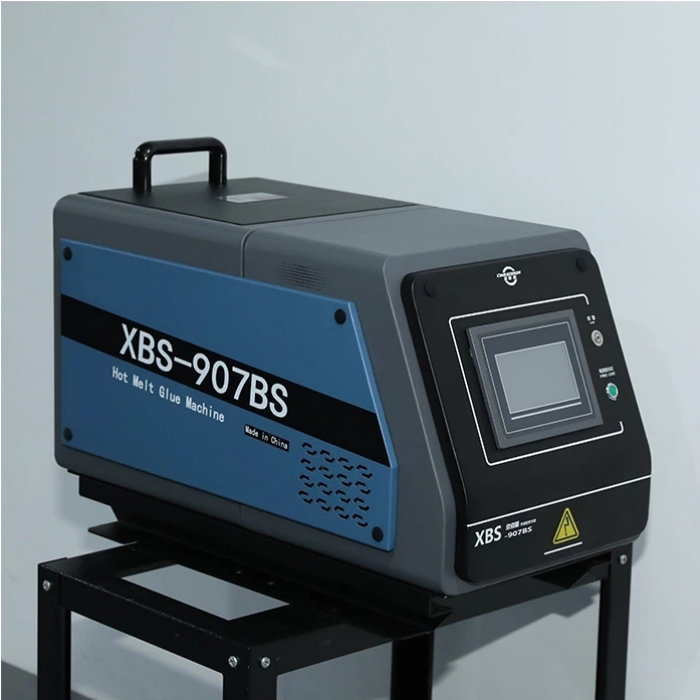
At Xinbaishun, we understand the importance of reliable temperature control in hot melt adhesive systems. Our machines are designed with advanced technology to ensure precise and consistent temperature management throughout the application process.
Our Hot Melt Glue Machines for plastic are equipped with high-quality heating elements that provide fast, efficient heating while minimizing energy loss. The intelligent insulation system ensures that the adhesive remains at the optimal temperature for smooth, continuous operation.
Xinbaishun machines are equipped with precise temperature control systems, allowing users to adjust the temperature to suit different types of adhesives, whether they are standard hot melt adhesives or specialized PUR adhesives. This ensures that the adhesive performs at its best, with consistent bonding quality.
Our systems are designed to maintain temperature consistency even during continuous production, reducing the chances of adhesive inconsistency or clogging. By keeping the temperature stable, Xinbaishun machines also reduce the need for frequent maintenance, helping to minimize downtime and improve overall productivity.
Maintaining temperature control in a Hot Melt Glue Machine for plastic is a shared responsibility between the equipment and the operator. Here are some best practices to help operators maintain temperature stability:
Always refer to the manufacturer’s recommended temperature settings for the specific adhesive type and substrate being used. Using the correct temperature ensures the adhesive performs as intended and minimizes the risk of poor bonding.
It is essential to check the temperature control systems, including the thermostat, sensors, and heating elements, regularly to ensure they are functioning correctly. Regular inspections help detect any issues early, preventing costly repairs or production disruptions.
To prevent overheating, it is important to avoid leaving the machine running without adhesive or in idle mode for extended periods. Cleaning out any residual adhesive when not in use also helps prevent the buildup of char and clogging.
Temperature control in a Hot Melt Glue Machine is much more than just a technical detail—it is the foundation for reliable adhesive bonding, safe operations, and long-term equipment performance. At Xinbaishun, we understand the importance of precise temperature regulation and have designed our systems with advanced heating, insulation, and control technologies to ensure consistent and reliable adhesive performance. If you're looking for high-quality, reliable hot melt glue machines, contact us today to learn more about how our products can meet your adhesive application needs.
1. What happens if the temperature is too high in a hot melt glue machine?
If the temperature is too high, the adhesive may become too thin, leading to excessive penetration into substrates and weak bonds. It can also cause the adhesive to break down, producing toxic fumes or increasing the risk of fire.
2. How can I maintain the temperature in a hot melt glue machine?
Regularly inspect the heating elements, insulation, and temperature control systems. Follow the manufacturer’s recommended temperature settings for the specific adhesive and substrate.
3. Why is temperature control important for hot melt adhesive bonding?
Temperature control ensures the adhesive melts properly, adheres correctly to the substrate, and forms a strong bond. Inconsistent temperatures can lead to poor bonding or adhesive waste.
4. What safety precautions should be taken when working with a hot melt glue machine?
Wear heat-resistant gloves, goggles, and protective clothing to avoid burns and injuries. Also, ensure proper machine maintenance to prevent overheating, toxic fumes, and fire hazards.


